
First validate sampling and the salt-analysis result. Then compare inlet and outlet salt, outlet water, wash-water quality and flow, mixing condition, temperature, crude blend and stage-by-stage performance on one timeline. Correct the identified constraint one controlled variable at a time; do not treat more water or more mixing as universal cures.
The operating dilemma
The outlet crude may appear dry while its reported salt content rises. This can happen because desalting requires two linked steps: water must contact and dissolve or dilute water-soluble salts, and the resulting brine droplets must then coalesce and separate. A water test describes retained water; it does not by itself prove that salt was contacted, transferred and removed efficiently.
What is easily misdiagnosed
- “Normal water means the desalter is working.” Salt removal and final water content are related but not interchangeable measurements.
- “Increase mixing immediately.” Weak mixing can limit salt washing, while excessive mixing can create smaller droplets and a more persistent emulsion.
- “Increase wash water immediately.” Wash-water quantity, salinity, distribution and contact all matter; more water can add hydraulic load without solving poor contact.
- “The transformer must be weak.” Electrical behaviour is only one part of the evidence and should not be blamed before process and analytical checks are complete.
- “One laboratory number is enough.” Representative sampling, extraction conditions, cell condition and interfering species can affect salt analysis.
Decision logic: locate the failed step
Contact and transfer
Check whether wash water reaches the crude uniformly and whether mixing is sufficient to transfer water-soluble salt into the water phase.
Coalescence and separation
Check whether temperature, crude viscosity, emulsion stability, electrical behaviour, residence opportunity and water loading allow the contacted brine droplets to separate.
Do not skip steps: follow the evidence chain
- 01Validate the result
Sampling, repeat test, method and QC
- 02Check contact
Wash-water quality, flow, distribution and mixing
- 03Check separation
Temperature, emulsion, interface, field and water load
- 04Verify by stage
Synchronized trends, one-variable trials and response
Step-by-step troubleshooting path
1. Confirm the result before changing the unit
Repeat or cross-check the outlet sample under the site's approved method. Confirm the sample point, sampling time, representativeness, preparation and instrument quality control. The source material notes that low-level salt measurement can be sensitive to extraction conditions, cell condition and interferences; use the current approved laboratory method for acceptance decisions.
2. Build a stage-by-stage mass-balance view
Place inlet salt, each-stage outlet salt, outlet water and brine observations on the same time scale. Compare the abnormal period with a stable baseline. A single final sample cannot distinguish a first-stage contact problem from a second-stage separation problem.
3. Check wash-water delivery and quality
Verify actual flow indication, valve response, distribution and interruptions. Review wash-water salt content and other quality changes. The local sources identify insufficient wash water and higher wash-water salinity as causes of reduced salt removal, but the correct flow and quality are project-specific.
4. Check mixing as an optimum, not a maximum
Review the actual mixing-device condition or differential-pressure trend against the approved operating envelope. Too little mixing limits water-oil contact; too much can over-disperse water and make separation harder. Do not copy a historical differential-pressure figure into a different unit.
5. Review temperature and crude changes
Check whether the crude blend, feed salt, density or viscosity changed before the result moved. Temperature affects viscosity, density difference and droplet separation, but any adjustment must remain within the approved pressure, materials and process limits.
6. Correlate electrical and hydraulic evidence
Review voltage, current and trip trends together with interface, throughput and brine condition. If contact appears adequate but separation deteriorates, investigate emulsion stability, water loading, field availability, distribution and hydraulic constraints before escalating to approved electrical or internal inspection.
Cause-to-direction map
- Result not repeatable: correct sampling or analytical control before touching the process.
- Wash-water interruption or poor distribution: restore the approved delivery path and verify actual flow.
- Wash-water salinity increased: review water source and project water-quality requirements.
- Mixing below the validated range: cautiously restore adequate contact.
- Mixing above the validated range with emulsion symptoms: reduce shear only through an approved controlled test.
- Crude became heavier or inlet salt rose: re-establish the operating envelope with current feed data and chemistry evaluation.
- Process evidence is normal but stage efficiency remains poor: verify distribution, electrical availability and internal condition through qualified procedures.
Field checklist
- Repeat the outlet salt test and record method, sample point and time.
- Collect synchronized inlet/outlet salt and water results for each available stage.
- Trend crude blend, throughput, temperature and interface.
- Verify wash-water source, quality, flow indication and valve response.
- Trend mixing-device differential pressure or approved equivalent.
- Review demulsifier program changes without assuming dosage is the root cause.
- Trend transformer voltage, current and trips; never bypass protection.
- Observe brine and emulsion behaviour using approved sampling procedures.
- Change one controlled factor at a time and document stabilization and response.
Applicability boundary
Source note
Primary local sources reviewed: Crude Oil Electrostatic Desalting and Dehydration Technology, professionally reconstructed and twice-reviewed V0.5, PDF pages 169 and 175-178 (printed pages 157 and 163-166); and Atmospheric and Vacuum Distillation Technical Q&A, Chapter 4, refined electronic edition, PDF page 22 (printed page 66). The article is an original engineering synthesis. Numerical laboratory conditions and historical operating values in those pages were reviewed but intentionally not converted into current recommendations.
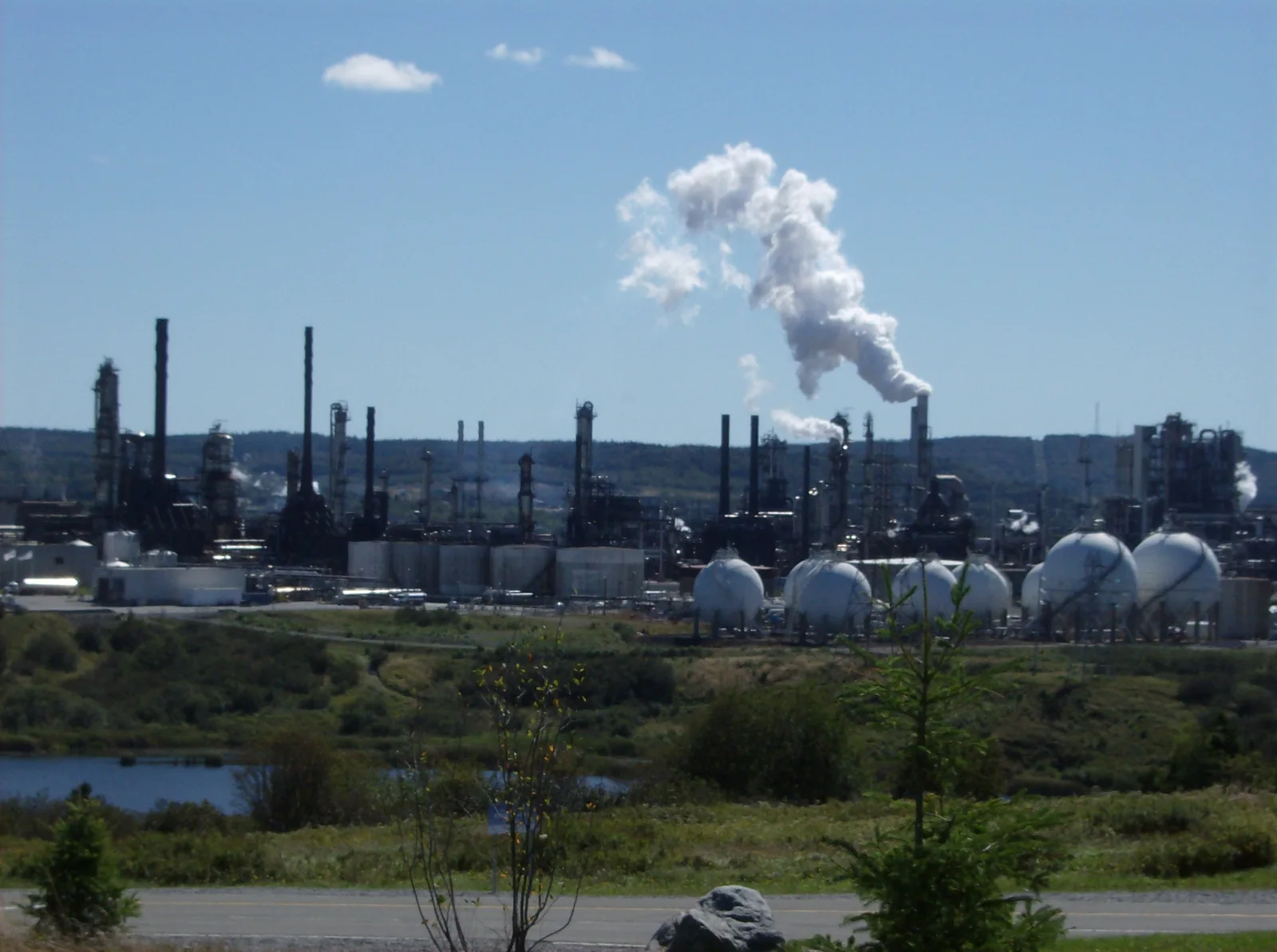
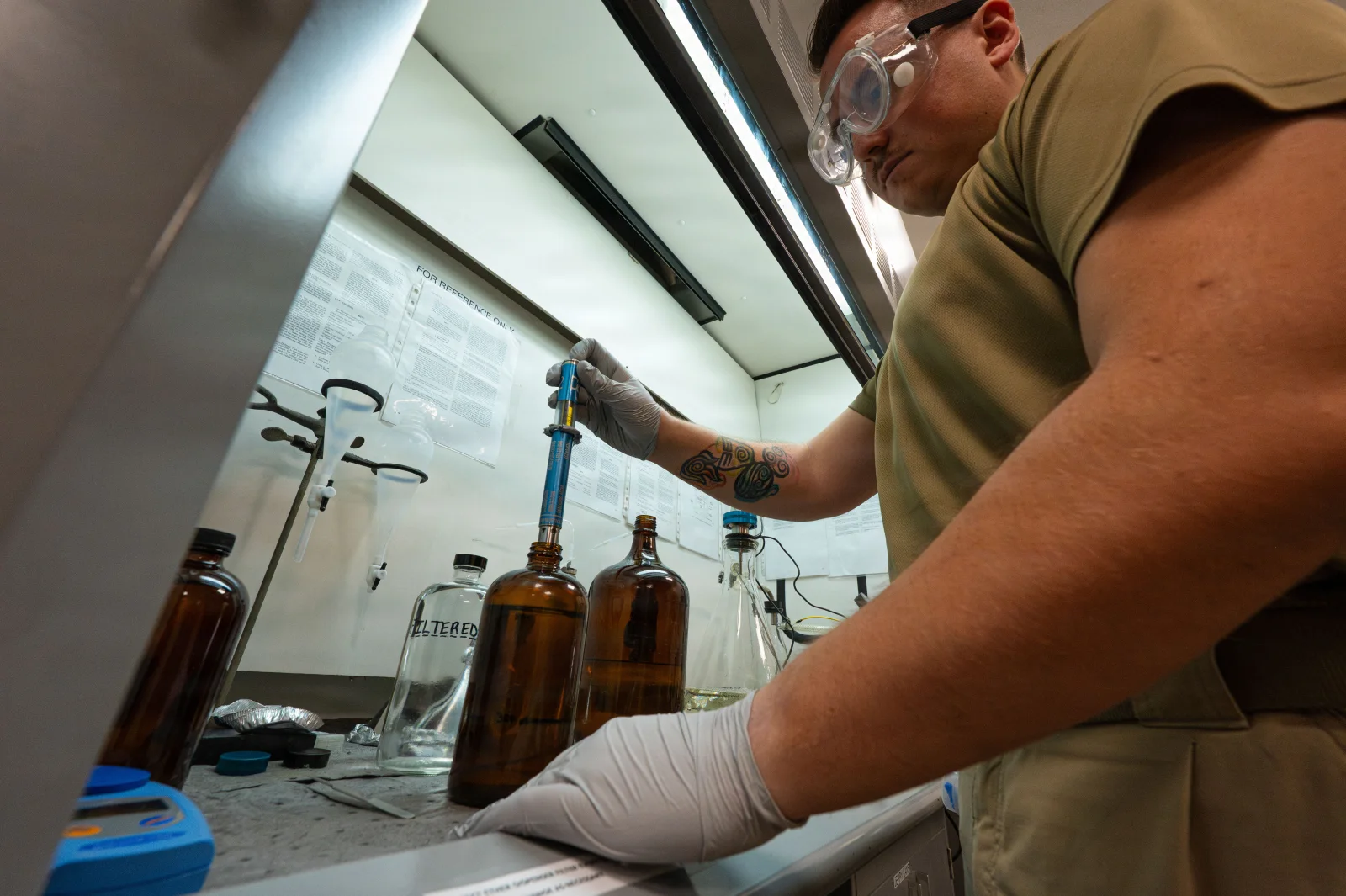
Image credits and licences: refinery photograph by Cusack5239, via Wikimedia Commons, used under CC BY-SA 3.0 and resized for the page; laboratory photograph by U.S. Air Force / Senior Airman Joseph Garcia, via Wikimedia Commons, public domain in the United States. Both are illustrative and do not represent a Shenyang No.4 project or endorsement by the depicted organizations.

.jpg)